Savannah breeders, verified by hand.
The tallest domestic cat, and the most regulated.
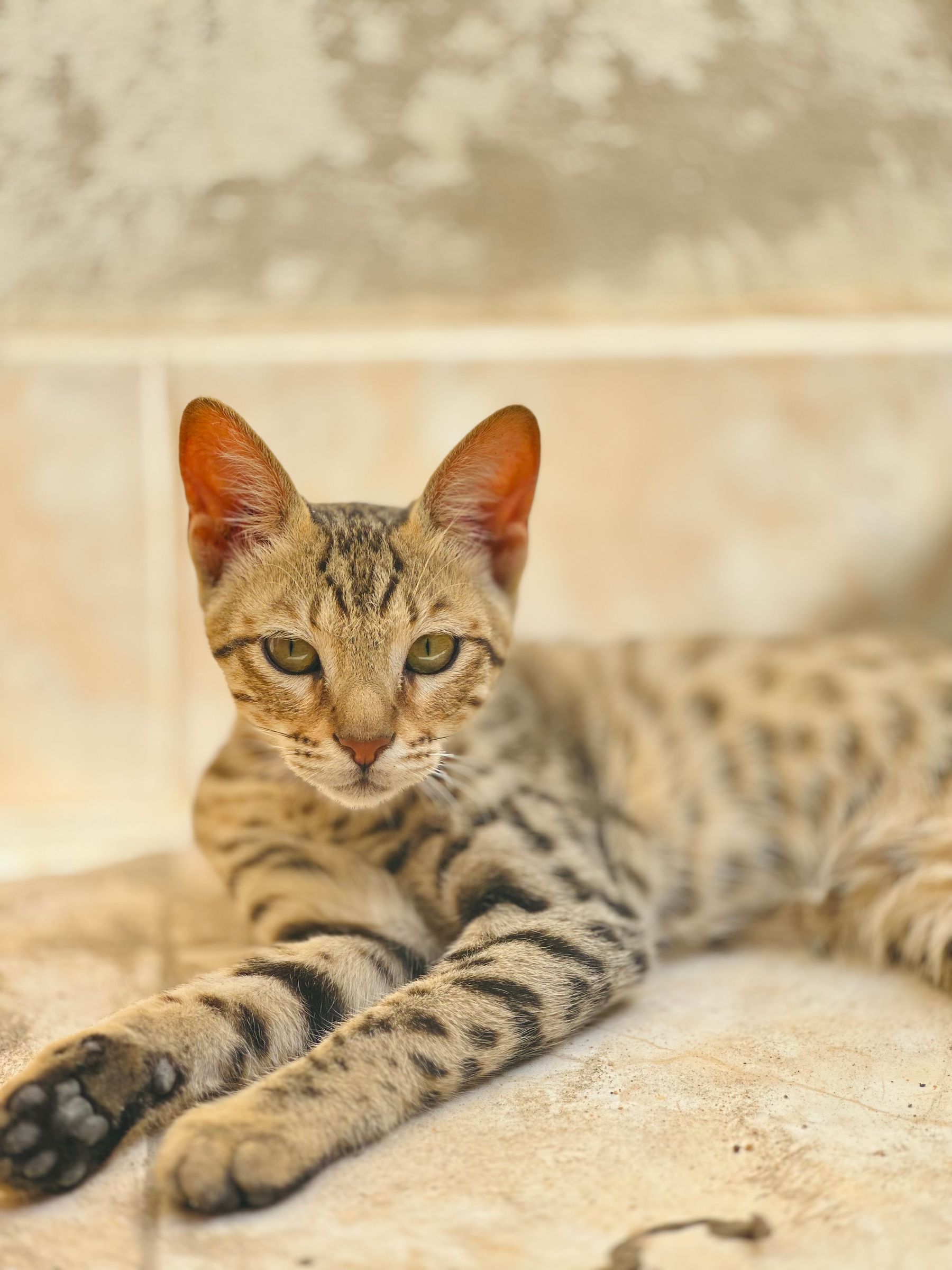
Tall, long-legged and serval-descended. Early generations are the most heavily regulated cats in the hobby — several states restrict or ban them outright, and the rules change.
History
Savannahs descend from crosses between domestic cats and the African serval. The first documented Savannah was born in 1986; Patrick Kelly and Joyce Sroufe wrote the original breed standard in 1996 and TICA accepted the breed for registration in 2001. Early-generation Savannahs are the closest thing in the cat world to owning a wild animal, and are regulated accordingly.
Living with one
Confident, dog-like and demanding. Many learn to walk on a harness and to fetch. Early generations are a serious commitment in space, secure fencing and time, and are not a first cat.
What Savannahs are screened for
PK-Def is a standard genetic test. HCM screening by echo matters as it does in most pedigree breeds. Because early generations are large and long-legged, ask specifically about the queen's history — early-generation breeding carries real risks for the cats involved, and a breeder who will not discuss that openly is telling you something.
This is what breeders in this breed commonly screen for. It is not veterinary advice, not a complete list, and Kittenry does not authenticate the documents a breeder provides — here is exactly what we do and don't check.
What the F-number actually means
Savannahs descend from the African serval. The generation counts how many steps removed a cat is from that ancestor — F1 is the first cross, and each number after it is one more generation of domestic breeding.
| Generation | Typically treated as |
|---|---|
| F1 | Often regulated as an exotic animal |
| F2 | Often regulated as an exotic animal |
| F3 | Often regulated as an exotic animal |
| F4 | Generally treated as a domestic cat |
| F5 | Generally treated as a domestic cat |
| SBT | Generally treated as a domestic cat |
Legality is your responsibility
This is the breed where legality bites hardest. Several US states restrict or prohibit early-generation Savannahs outright, some require exotic-animal permits, and city ordinances can be stricter than state law. Rules change. Confirm with your own state and municipality before you pay a deposit — a breeder's assurance is not a legal opinion, and neither is this page.
Four questions worth asking
What generation is this kitten, precisely, and what percentage serval?
Is this generation legal where I live, and will you help me confirm it?
Can I see the parents' PK-Def results and most recent HCM echo?
What happens if my city turns out to prohibit this generation?
And one rule that applies to every breed on this site: pay by credit card. Zelle, Cash App and wire transfers have no chargeback rights. Kittenry never handles your money — you pay the breeder directly, and we want your dispute rights intact.
Savannahs on Kittenry
We're onboarding our founding catteries now, and Savannah is one of the breeds we're actively recruiting. If you breed Savannahs, apply here — the first catteries in each breed are listed free.
Looking for a Savannah?
Tell us what you're after and we'll point you at the right cattery when one has kittens.
0 other waiting for a Savannah right now.